ShiaLaBeoufFan
YOUR SOURCE FOR ACTOR, FILMMAKER AND ARTIST, SHIA LABEOUF!

The Battle of Shaker Heights


Written by Siobhan on September 01 2026

The Battle of Shaker Heights is a 2003 comedy-drama directed by Efram Potelle and Kyle Rankin and written by Erica Beeney. The film follows Kelly Ernswiler, a high school student whose fascination with military history and war reenactments provides an escape from the frustrations of everyday life. Alongside his friend Bart, Kelly approaches the conflicts of adolescence through the language and strategy of historical warfare.


Shia LaBeouf stars as Kelly Ernswiler, an intelligent and imaginative teenager who spends much of his free time studying military tactics and reenacting historic battles. Kelly’s interest in warfare is more than a hobby; it gives him a framework through which he can understand conflict, strategy, and control at a time when his own life feels increasingly difficult to manage.


Kelly’s closest friend is Bart Bowland (Elden Henson), who shares his enthusiasm for military history and participates in the boys’ elaborate reenactments. Their friendship gives Kelly an outlet for his imagination while also providing him with someone who understands the unusual way he views the world. When Kelly’s real-life problems become more complicated, however, the distinction between his carefully controlled battles and genuine human relationships begins to disappear.


At school, Kelly finds himself dealing with Lance, a bully who becomes the target of his strategic thinking. Rather than confronting his problems in a conventional way, Kelly attempts to apply the lessons of military history to his conflict with Lance. His fascination with tactics allows him to feel more capable and confident, but it also demonstrates how much he relies on his imagined world to navigate situations he finds difficult to handle directly.


Kelly’s life becomes further complicated when he develops feelings for Tabby (Amy Smart), Bart’s older sister. Their relationship introduces an entirely different kind of conflict into Kelly’s life. His attraction to Tabby puts additional strain on his friendship with Bart, while Tabby’s own relationship with Miner Weber (Anson Mount) creates an uncomfortable reality that Kelly’s carefully constructed strategies cannot easily overcome.


At home, Kelly is dealing with problems that are considerably more serious than the battles he reenacts with Bart. His father, Abe (William Sadler), is a recovering drug addict, and the difficulties within the Ernswiler household force Kelly to confront emotions that he has largely kept hidden behind humor, intelligence, and his fascination with military history. His mother, Eve (Kathleen Quinlan), attempts to maintain stability within the family as tensions continue to grow.


As Kelly’s relationships begin to unravel, the film gradually reveals the limitations of his fantasy world. Military strategy can provide clear objectives and predictable outcomes, but friendship, romance, family, and personal loss cannot be resolved through the same rules. Kelly must begin to recognize that real conflict carries consequences that cannot simply be reset or reenacted.


The Battle of Shaker Heights explores themes of adolescence, imagination, friendship, family, conflict, and emotional maturity. Kelly’s obsession with war becomes a metaphor for his attempt to impose order on a world that feels increasingly unpredictable. His journey is ultimately less about the battles he reenacts than about learning how to face the complicated realities of growing up.


LaBeouf’s performance gives Kelly both the eccentricity of an intensely imaginative teenager and the vulnerability beneath his carefully maintained confidence. He brings humor to Kelly’s fascination with military strategy while allowing the character’s more serious struggles to emerge naturally. The performance also demonstrates LaBeouf’s ability, even early in his career, to balance comedic timing with more emotionally grounded dramatic moments.
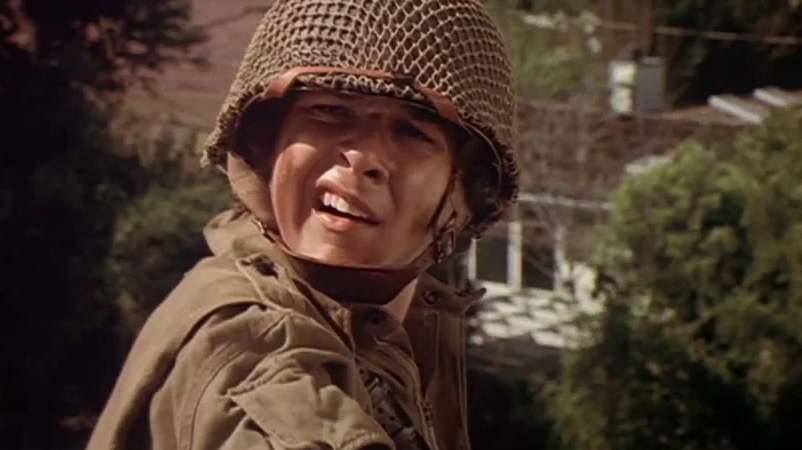
 

As Kelly’s imagined battles increasingly give way to real consequences, The Battle of Shaker Heights becomes a story about the difficult transition between adolescence and adulthood. Kelly begins the film believing that every conflict can be understood through strategy, but gradually discovers that the most important battles in life are rarely so straightforward.

American Honey


Written by Siobhan on September 01 2026

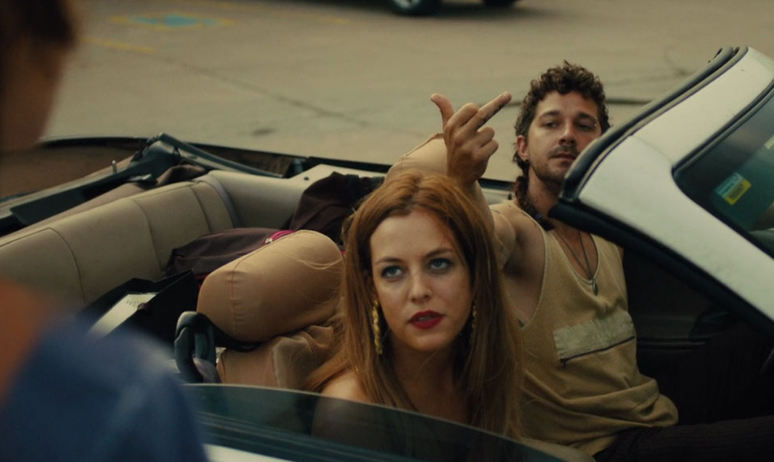
American Honey is a 2016 drama written and directed by Andrea Arnold. Set across the highways, small towns, and open landscapes of the American Midwest, the film follows Star (Sasha Lane), a teenager from a troubled home who leaves behind her difficult circumstances and joins a traveling crew of young magazine sellers. Living out of a van and moving from town to town, the group survives by selling subscriptions door to door while embracing a restless lifestyle built around freedom, rebellion, and constant movement.


Shia LaBeouf stars as Jake, one of the crew’s most experienced and charismatic members. Working under the demanding Krystal (Riley Keough), Jake is responsible for recruiting potential customers and helping bring new young people into the sales operation. Confident and outgoing, he immediately captures Star’s attention when she encounters the crew, and he becomes one of the primary reasons she decides to leave her old life behind.


After joining the group, Star is introduced to a world dramatically different from the one she has known. The crew travels constantly, spending their days moving through unfamiliar communities and their nights partying together. Although their lifestyle offers Star an intoxicating sense of independence, it also exposes her to exploitation, financial uncertainty, drugs, alcohol, and the complicated relationships that develop among people living together under unusual circumstances.


Jake and Star gradually develop a romantic relationship, although their connection is complicated by the environment in which they live. Jake is drawn to Star’s independence and unpredictability, while Star becomes increasingly fascinated by Jake’s confidence and apparent freedom. Their relationship exists alongside the competitive and sometimes exploitative world of the sales crew, making it difficult for either of them to separate genuine affection from the circumstances surrounding them.


As the crew travels from one town to another, the film spends considerable time observing the personalities and dynamics within the group. The young salespeople form a temporary family of sorts, sharing cramped living quarters, money, experiences, and increasingly personal relationships. At the same time, their dependence on Krystal and the demands of the sales operation create an underlying tension between the freedom they appear to have and the limitations imposed upon them.


Jake’s position within the group gives him a degree of authority and experience that distinguishes him from many of the other young people. He understands how the sales operation works and knows how to persuade potential customers, making him particularly valuable to Krystal. Beneath his easy charm, however, Jake is also a young man navigating the same uncertainty and instability as everyone else around him.


American Honey explores themes of youth, freedom, poverty, belonging, exploitation, romance, and the search for identity. Rather than presenting its young characters as simply rebellious or irresponsible, the film examines the economic and social circumstances that influence their choices. The open road becomes both a symbol of freedom and a reminder that constant movement can make it difficult to establish any lasting sense of home.


Arnold’s naturalistic approach gives the film an unusually intimate quality. Much of the cast consists of young performers and newcomers, while the production traveled through several states to capture the changing environments encountered by the crew. The result is a sprawling portrait of American youth that emphasizes atmosphere, character, music, and observation as much as conventional plot.


LaBeouf’s performance as Jake balances confidence with vulnerability. Jake initially appears to have mastered the unpredictable lifestyle of the sales crew, but his relationship with Star reveals a more complicated side of him. His charm and impulsiveness make him an appealing presence while also reflecting the instability that defines the world he inhabits.


At its center, American Honey is a story about young people searching for somewhere to belong. Star’s journey provides the film’s emotional perspective, while Jake becomes an important part of her introduction to a world that promises freedom without necessarily providing security. Their relationship ultimately reflects the film’s larger tension between the desire to escape and the equally powerful desire to find something worth staying for.

A Guide to Recognizing Your Saints


Written by Siobhan on September 01 2026

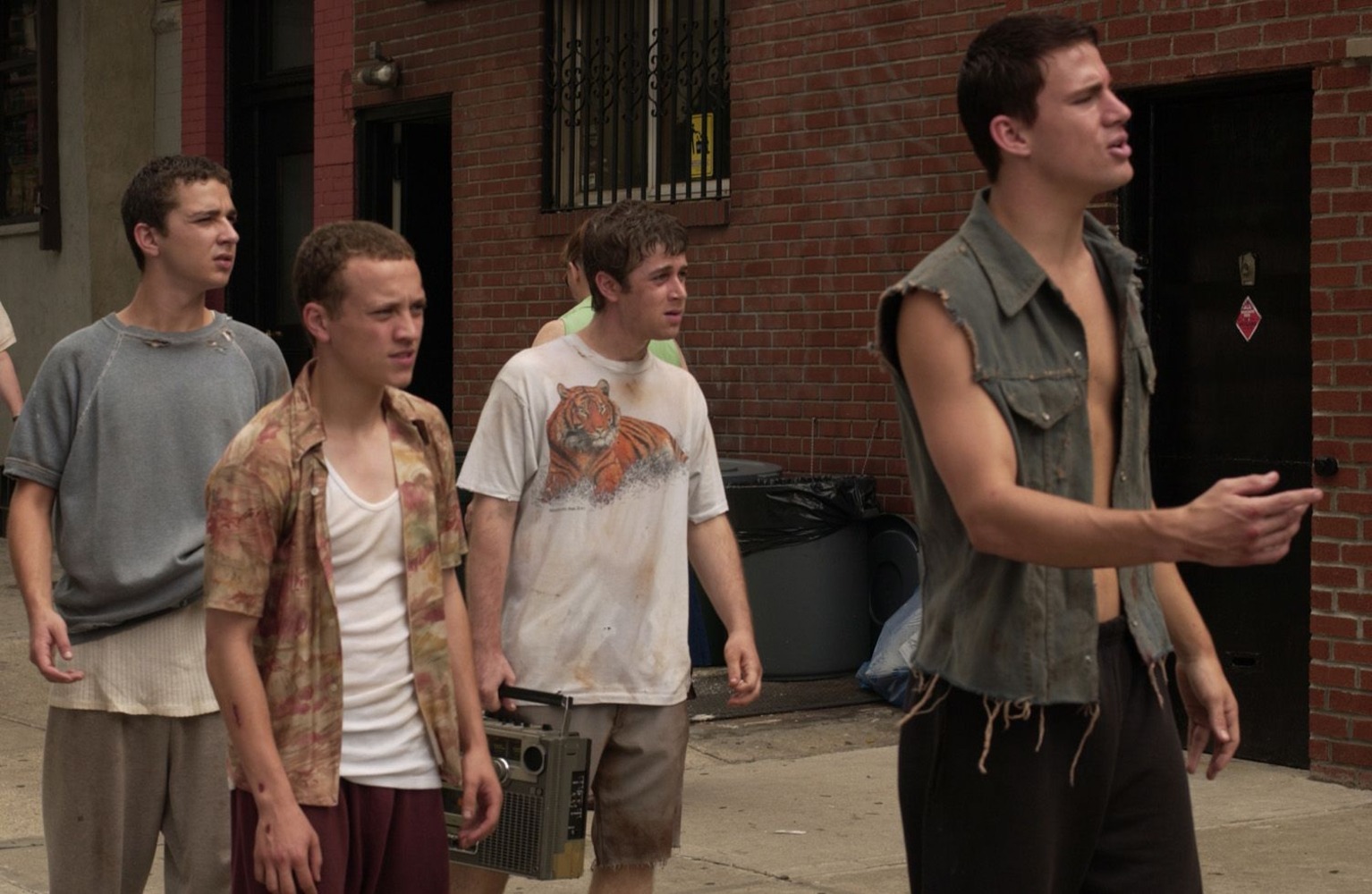
A Guide to Recognizing Your Saints is a 2006 coming-of-age drama written and directed by Dito Montiel and adapted from his autobiographical memoir. Set primarily in Astoria, Queens, during the 1980s, the film follows a group of young friends growing up amid violence, family conflict, drugs, and the pressures of their neighborhood. The story moves between Dito’s adolescence and his adult life, examining the people and experiences that shaped the man he eventually became.


Shia LaBeouf stars as Young Dito Montiel, the teenage version of the film’s central character. Robert Downey Jr. portrays Dito as an adult, with the two performances forming a connection between the character’s troubled adolescence and his later life as a successful writer living in Los Angeles. The younger Dito is intelligent and observant, but increasingly aware that remaining in his neighborhood may mean becoming trapped in the same cycle of violence and hardship surrounding him.


Dito’s closest friendships form the heart of his adolescence. He spends his days with Antonio (Channing Tatum), Giuseppe, Nerf, and Mike, while developing a relationship with Laurie (Melonie Diaz). Each friend is affected differently by the environment around them, and Dito gradually watches as the people closest to him become caught up in drugs, violence, crime, and other destructive circumstances.


At home, Dito struggles with his complicated relationship with his parents. His father, Monty (Chazz Palminteri), is a volatile and demanding presence, while his mother, Flori (Dianne Wiest), provides a more sympathetic connection. Their difficult family dynamic contributes to Dito’s growing desire to leave Queens and build a life beyond the world he has always known.


As the story progresses, the consequences of the characters’ choices become increasingly severe. What begins as a portrait of teenage friendship gradually becomes a story about loss and the ways in which seemingly ordinary moments can lead to irreversible consequences. Dito finds himself caught between loyalty to the people he loves and his determination to escape the circumstances that threaten to define his future.


The film’s present-day storyline follows adult Dito after his mother contacts him about his father’s failing health. Having been away from Queens for many years, he must decide whether to return home and confront the memories he has spent much of his adult life trying to leave behind. His return forces him to reconsider his relationships with his parents, his former friends, and the neighborhood that shaped him.


A Guide to Recognizing Your Saints explores themes of friendship, family, loyalty, violence, regret, and the desire for escape. Rather than presenting Dito’s departure from Queens as a simple triumph, the film examines the complicated emotions that accompany leaving people behind. The people Dito remembers as his “saints” are not necessarily perfect or heroic; instead, they are individuals whose presence, kindness, mistakes, or sacrifices helped influence the course of his life.


LaBeouf’s performance as Young Dito captures a teenager caught between two competing impulses: remaining loyal to the people and place he loves while desperately wanting a different future. His portrayal gives Dito a mixture of toughness, vulnerability, and uncertainty, making the character’s eventual decision to leave feel less like an easy escape and more like a painful separation from the world that formed him.


With its nonlinear structure and gritty depiction of 1980s Queens, A Guide to Recognizing Your Saints presents adolescence as a period shaped as much by circumstance as by individual choice. For LaBeouf, the role marked an important dramatic performance early in his career, placing him alongside an ensemble that included Robert Downey Jr., Chazz Palminteri, Dianne Wiest, Channing Tatum, and Rosario Dawson.

Page 1 of 4 1 2 3 4
Shia-LaBeouf-The-Greatest-Game-Ever-Played-Poster-0003.jpg
Shia-LaBeouf-The-Greatest-Game-Ever-Played-Poster-0001.jpg
Shia-LaBeouf-The-Greatest-Game-Ever-Played-Poster-0002.jpg
Shia-LaBeouf-The-Greatest-Game-Ever-Played-Stills-0015.jpg
Shia-LaBeouf-The-Greatest-Game-Ever-Played-Stills-0016.jpg
Shia-LaBeouf-The-Greatest-Game-Ever-Played-Stills-0013.jpg
Shia-LaBeouf-The-Greatest-Game-Ever-Played-Stills-0014.jpg
Shia-LaBeouf-The-Greatest-Game-Ever-Played-Stills-0012.jpg
Shia-LaBeouf-The-Greatest-Game-Ever-Played-Stills-0004.jpg
Shia-LaBeouf-The-Greatest-Game-Ever-Played-Stills-0005.jpg
Shia-LaBeouf-The-Greatest-Game-Ever-Played-Stills-0006.jpg