ShiaLaBeoufFan
YOUR SOURCE FOR ACTOR, FILMMAKER AND ARTIST, SHIA LABEOUF!

Honey Boy


Written by Siobhan on September 01 2026

Honey Boy is a 2019 drama directed by Alma Har’el and written by Shia LaBeouf. Inspired by LaBeouf’s own childhood and his experiences as a young actor, the film moves between two periods in the life of Otis Lort: his adolescence as a successful child performer and his adulthood, when his career and personal life have begun to unravel. The story examines the complicated relationship between Otis and his father while exploring the lasting effects of childhood trauma.


Shia LaBeouf stars as James Lort, Otis’s father and a former rodeo clown who becomes his son’s manager and constant companion. James is an unpredictable and complicated presence in Otis’s childhood, simultaneously expressing affection for his son while subjecting him to emotional volatility, manipulation, and abuse. His involvement in Otis’s career gives him considerable control over the boy’s life, blurring the boundaries between father, manager, and authority figure.


The story begins with adult Otis (Lucas Hedges), a successful actor whose struggles with alcohol and destructive behavior have led him to a court-ordered rehabilitation program. His counselor, Dr. Moreno (Laura San Giacomo), encourages him to examine the experiences that contributed to his present circumstances. Through memories and therapeutic exercises, Otis begins revisiting his childhood and the difficult relationship with his father that shaped much of his early life.


Young Otis (Noah Jupe) is already working professionally as a television actor when James becomes increasingly involved in managing his career. The boy spends long hours on sets while his father remains close by, supervising his work and relying on Otis’s income. Although James wants to remain an important part of his son’s life, his own instability and resentment frequently turn their relationship into a source of fear and tension.


James’s behavior is inconsistent, making it difficult for Otis to understand what kind of father he will encounter from one moment to the next. He can be affectionate and proud of his son’s accomplishments, but he can also become angry, controlling, and verbally abusive. Otis learns to anticipate his father’s moods while continuing to depend upon him for companionship and protection.


Outside the immediate relationship with his father, Otis finds moments of connection with people around him. His friendship with Shy Girl (FKA twigs), a young woman living near the motel where Otis and James stay, provides him with a glimpse of a more peaceful and supportive relationship. These experiences become increasingly important as Otis attempts to understand what a healthier life might look like.


The adult storyline gradually reveals how deeply Otis’s childhood experiences have affected him. Fame has given him professional success, but it has not erased the emotional damage of his upbringing. His substance abuse and increasingly destructive behavior become manifestations of unresolved trauma, forcing him to confront memories he has spent years attempting to suppress.
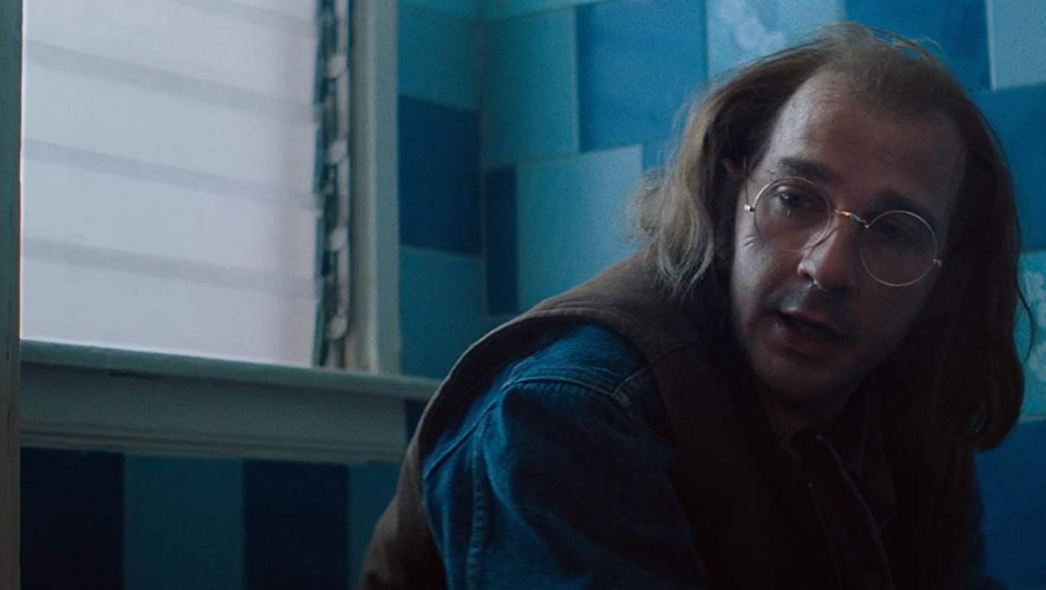


James remains central to Otis’s memories even as their relationship becomes increasingly painful to revisit. Adult Otis must confront not only the harm his father caused but also the complicated feelings of love, loyalty, anger, and disappointment that remain intertwined with those memories. The film avoids presenting their relationship as entirely simple, instead examining how a child can simultaneously love a parent and be deeply hurt by that parent.


Honey Boy explores themes of childhood trauma, family, addiction, fame, forgiveness, memory, and recovery. Its nonlinear structure allows past and present to continually inform one another, illustrating how experiences from childhood can remain present long after the circumstances themselves have changed. The film ultimately considers whether confronting painful memories can make it possible to understand them without allowing them to define the future.


LaBeouf’s performance as James is deliberately complex. Rather than portraying him as a one-dimensional villain, he presents a man whose affection for his son exists alongside destructive behavior and personal instability. James can be funny, charismatic, loving, and deeply unsettling, sometimes within the same scene. That contradiction makes his influence on Otis particularly powerful and helps explain why their relationship remains so difficult for Otis to understand.


The role also gives LaBeouf an unusual connection to the material, as James is a fictionalized version of his own father. Combined with his screenplay, the performance makes Honey Boy an especially personal entry in his filmography. The film ultimately transforms a story of a troubled father and son into a broader examination of memory, survival, and the possibility of finding a way forward without denying the past.

The Battle of Shaker Heights


Written by Siobhan on September 01 2026

The Battle of Shaker Heights is a 2003 comedy-drama directed by Efram Potelle and Kyle Rankin and written by Erica Beeney. The film follows Kelly Ernswiler, a high school student whose fascination with military history and war reenactments provides an escape from the frustrations of everyday life. Alongside his friend Bart, Kelly approaches the conflicts of adolescence through the language and strategy of historical warfare.


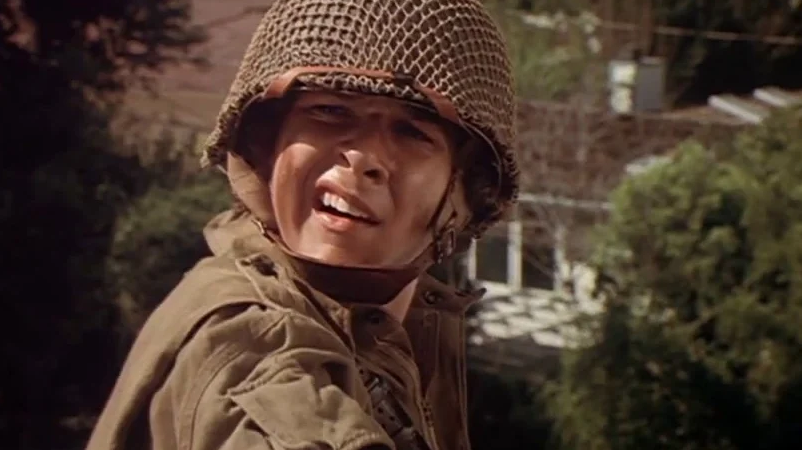
Shia LaBeouf stars as Kelly Ernswiler, an intelligent and imaginative teenager who spends much of his free time studying military tactics and reenacting historic battles. Kelly’s interest in warfare is more than a hobby; it gives him a framework through which he can understand conflict, strategy, and control at a time when his own life feels increasingly difficult to manage.


Kelly’s closest friend is Bart Bowland (Elden Henson), who shares his enthusiasm for military history and participates in the boys’ elaborate reenactments. Their friendship gives Kelly an outlet for his imagination while also providing him with someone who understands the unusual way he views the world. When Kelly’s real-life problems become more complicated, however, the distinction between his carefully controlled battles and genuine human relationships begins to disappear.


At school, Kelly finds himself dealing with Lance, a bully who becomes the target of his strategic thinking. Rather than confronting his problems in a conventional way, Kelly attempts to apply the lessons of military history to his conflict with Lance. His fascination with tactics allows him to feel more capable and confident, but it also demonstrates how much he relies on his imagined world to navigate situations he finds difficult to handle directly.


Kelly’s life becomes further complicated when he develops feelings for Tabby (Amy Smart), Bart’s older sister. Their relationship introduces an entirely different kind of conflict into Kelly’s life. His attraction to Tabby puts additional strain on his friendship with Bart, while Tabby’s own relationship with Miner Weber (Anson Mount) creates an uncomfortable reality that Kelly’s carefully constructed strategies cannot easily overcome.


At home, Kelly is dealing with problems that are considerably more serious than the battles he reenacts with Bart. His father, Abe (William Sadler), is a recovering drug addict, and the difficulties within the Ernswiler household force Kelly to confront emotions that he has largely kept hidden behind humor, intelligence, and his fascination with military history. His mother, Eve (Kathleen Quinlan), attempts to maintain stability within the family as tensions continue to grow.


As Kelly’s relationships begin to unravel, the film gradually reveals the limitations of his fantasy world. Military strategy can provide clear objectives and predictable outcomes, but friendship, romance, family, and personal loss cannot be resolved through the same rules. Kelly must begin to recognize that real conflict carries consequences that cannot simply be reset or reenacted.


The Battle of Shaker Heights explores themes of adolescence, imagination, friendship, family, conflict, and emotional maturity. Kelly’s obsession with war becomes a metaphor for his attempt to impose order on a world that feels increasingly unpredictable. His journey is ultimately less about the battles he reenacts than about learning how to face the complicated realities of growing up.


LaBeouf’s performance gives Kelly both the eccentricity of an intensely imaginative teenager and the vulnerability beneath his carefully maintained confidence. He brings humor to Kelly’s fascination with military strategy while allowing the character’s more serious struggles to emerge naturally. The performance also demonstrates LaBeouf’s ability, even early in his career, to balance comedic timing with more emotionally grounded dramatic moments.


As Kelly’s imagined battles increasingly give way to real consequences, The Battle of Shaker Heights becomes a story about the difficult transition between adolescence and adulthood. Kelly begins the film believing that every conflict can be understood through strategy, but gradually discovers that the most important battles in life are rarely so straightforward.

American Honey


Written by Siobhan on September 01 2026

American Honey is a 2016 drama written and directed by Andrea Arnold. Set across the highways, small towns, and open landscapes of the American Midwest, the film follows Star (Sasha Lane), a teenager from a troubled home who leaves behind her difficult circumstances and joins a traveling crew of young magazine sellers. Living out of a van and moving from town to town, the group survives by selling subscriptions door to door while embracing a restless lifestyle built around freedom, rebellion, and constant movement.


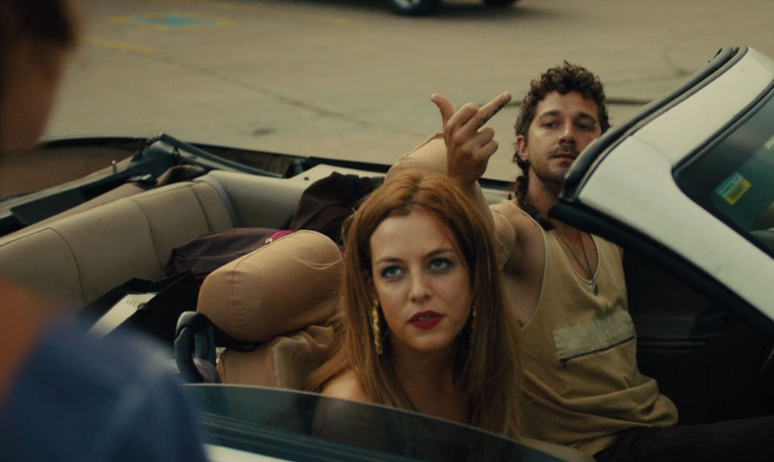
Shia LaBeouf stars as Jake, one of the crew’s most experienced and charismatic members. Working under the demanding Krystal (Riley Keough), Jake is responsible for recruiting potential customers and helping bring new young people into the sales operation. Confident and outgoing, he immediately captures Star’s attention when she encounters the crew, and he becomes one of the primary reasons she decides to leave her old life behind.


After joining the group, Star is introduced to a world dramatically different from the one she has known. The crew travels constantly, spending their days moving through unfamiliar communities and their nights partying together. Although their lifestyle offers Star an intoxicating sense of independence, it also exposes her to exploitation, financial uncertainty, drugs, alcohol, and the complicated relationships that develop among people living together under unusual circumstances.


Jake and Star gradually develop a romantic relationship, although their connection is complicated by the environment in which they live. Jake is drawn to Star’s independence and unpredictability, while Star becomes increasingly fascinated by Jake’s confidence and apparent freedom. Their relationship exists alongside the competitive and sometimes exploitative world of the sales crew, making it difficult for either of them to separate genuine affection from the circumstances surrounding them.


As the crew travels from one town to another, the film spends considerable time observing the personalities and dynamics within the group. The young salespeople form a temporary family of sorts, sharing cramped living quarters, money, experiences, and increasingly personal relationships. At the same time, their dependence on Krystal and the demands of the sales operation create an underlying tension between the freedom they appear to have and the limitations imposed upon them.


Jake’s position within the group gives him a degree of authority and experience that distinguishes him from many of the other young people. He understands how the sales operation works and knows how to persuade potential customers, making him particularly valuable to Krystal. Beneath his easy charm, however, Jake is also a young man navigating the same uncertainty and instability as everyone else around him.


American Honey explores themes of youth, freedom, poverty, belonging, exploitation, romance, and the search for identity. Rather than presenting its young characters as simply rebellious or irresponsible, the film examines the economic and social circumstances that influence their choices. The open road becomes both a symbol of freedom and a reminder that constant movement can make it difficult to establish any lasting sense of home.


Arnold’s naturalistic approach gives the film an unusually intimate quality. Much of the cast consists of young performers and newcomers, while the production traveled through several states to capture the changing environments encountered by the crew. The result is a sprawling portrait of American youth that emphasizes atmosphere, character, music, and observation as much as conventional plot.


LaBeouf’s performance as Jake balances confidence with vulnerability. Jake initially appears to have mastered the unpredictable lifestyle of the sales crew, but his relationship with Star reveals a more complicated side of him. His charm and impulsiveness make him an appealing presence while also reflecting the instability that defines the world he inhabits.


At its center, American Honey is a story about young people searching for somewhere to belong. Star’s journey provides the film’s emotional perspective, while Jake becomes an important part of her introduction to a world that promises freedom without necessarily providing security. Their relationship ultimately reflects the film’s larger tension between the desire to escape and the equally powerful desire to find something worth staying for.

Page 1 of 5 1 2 3 4 5
2003-Charlies-Angels-Full-Thro_Posters-Cover-Art-0002.jpg
2003-Charlies-Angels-Full-Thro_Posters-Cover-Art-0001.jpg
2003-Charlies-Angels-Full-Thro_Promos-Stills-1.jpg
2003-Charlies-Angels-Full-Thro_Screencaptures-0112.jpg
2003-Charlies-Angels-Full-Thro_Screencaptures-0111.jpg
2003-Charlies-Angels-Full-Thro_Screencaptures-0110.jpg
2003-Charlies-Angels-Full-Thro_Screencaptures-0109.jpg
2003-Charlies-Angels-Full-Thro_Screencaptures-0108.jpg
2003-Charlies-Angels-Full-Thro_Screencaptures-0107.jpg
2003-Charlies-Angels-Full-Thro_Screencaptures-0106.jpg
2003-Charlies-Angels-Full-Thro_Screencaptures-0105.jpg