ShiaLaBeoufFan
YOUR SOURCE FOR ACTOR, FILMMAKER AND ARTIST, SHIA LABEOUF!

Henry Johnson


Written by Siobhan on July 13 2026

Written and directed by Pulitzer Prize-winning playwright David Mamet, Henry Johnson is a dialogue-driven psychological drama adapted from Mamet’s 2023 stage play. The film follows Henry Johnson (Evan Jonigkeit), an idealistic attorney whose attempt to help a friend accused of murder sets off a chain of events that ultimately lands him in prison. Along the way, Henry repeatedly places his trust in authority figures and persuasive personalities, only to find himself manipulated by nearly everyone he encounters.


Rather than unfolding as a traditional narrative, the story is structured around a series of extended conversations. Each act introduces a different character who attempts to shape Henry’s understanding of morality, responsibility, and power. As Henry’s certainty erodes, he becomes increasingly susceptible to the worldviews imposed upon him, forcing him to question whether kindness and honesty have any place in a world driven by self-interest.


Shia LaBeouf appears as Gene, Henry’s charismatic prison cellmate. Although Gene enters the story midway through the film, he quickly becomes its dominant presence. Intelligent, manipulative, and deeply cynical, Gene views every human interaction as a contest between those who exploit and those who are exploited. Through a series of lengthy, intense conversations, he challenges Henry’s beliefs about justice, compassion, and personal responsibility, gradually exerting a powerful psychological influence over him.


Gene’s philosophy serves as the film’s emotional and intellectual centerpiece. His arguments blur the line between genuine insight and calculated manipulation, leaving both Henry and the audience questioning whether he is exposing uncomfortable truths or simply grooming another victim.


As Henry absorbs Gene’s worldview, his decisions become increasingly dangerous, culminating in a tense final act that suggests the devastating consequences of surrendering one’s moral judgment to someone else’s convictions.


Like many of Mamet’s works, Henry Johnson is less concerned with plot than with ideas. The film explores themes of authority, masculinity, free will, justice, and moral ambiguity through tightly constructed dialogue rather than action. Its minimalist presentation and theatrical structure place the emphasis squarely on the performances and the philosophical debates between its characters.


LaBeouf’s performance as Gene is among the film’s most memorable elements. His commanding delivery, shifting between quiet charm and unsettling intensity, transforms Gene into both mentor and manipulator. Despite limited screen time compared to the title character, Gene becomes the catalyst for Henry’s transformation, making LaBeouf’s role central to the film’s exploration of influence, persuasion, and the search for moral certainty.

Indiana Jones and the Kingdom of the Crystal Skull


Written by Siobhan on June 23 2026

One of the most anticipated films of the 2000s, Indiana Jones and the Kingdom of the Crystal Skull marked the long-awaited return of one of cinema’s most iconic adventurers nearly two decades after his previous outing. Combining globe-trotting action, elaborate set pieces, and the signature blend of mystery and humor that defined the series, the film introduced a new generation of audiences to the world of Indiana Jones while giving longtime fans the opportunity to see the legendary archaeologist back in action.


Set in 1957 against the backdrop of the Cold War, the story follows legendary archaeologist Dr. Indiana Jones as he becomes entangled in a race to uncover the truth behind a mysterious crystal skull said to possess extraordinary powers. Pursued by Soviet agents led by Irina Spalko, Indy soon finds himself crossing paths with a rebellious young motorcycle enthusiast named Henry “Mutt” Williams, played by Shia LaBeouf. What begins as a simple request for help quickly develops into an international adventure spanning secret government facilities, ancient ruins, dense South American jungles, and one of the franchise’s most ambitious archaeological mysteries.


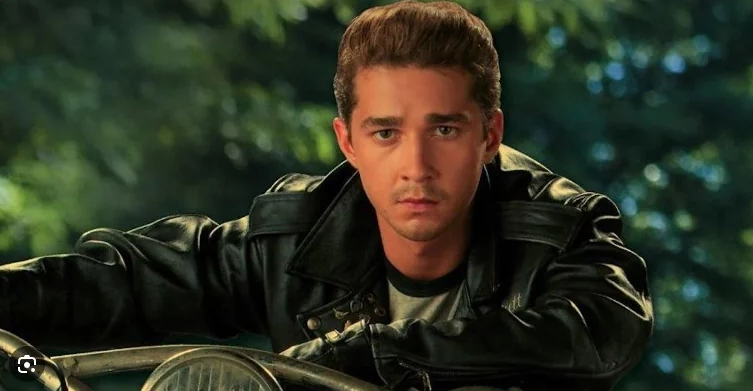
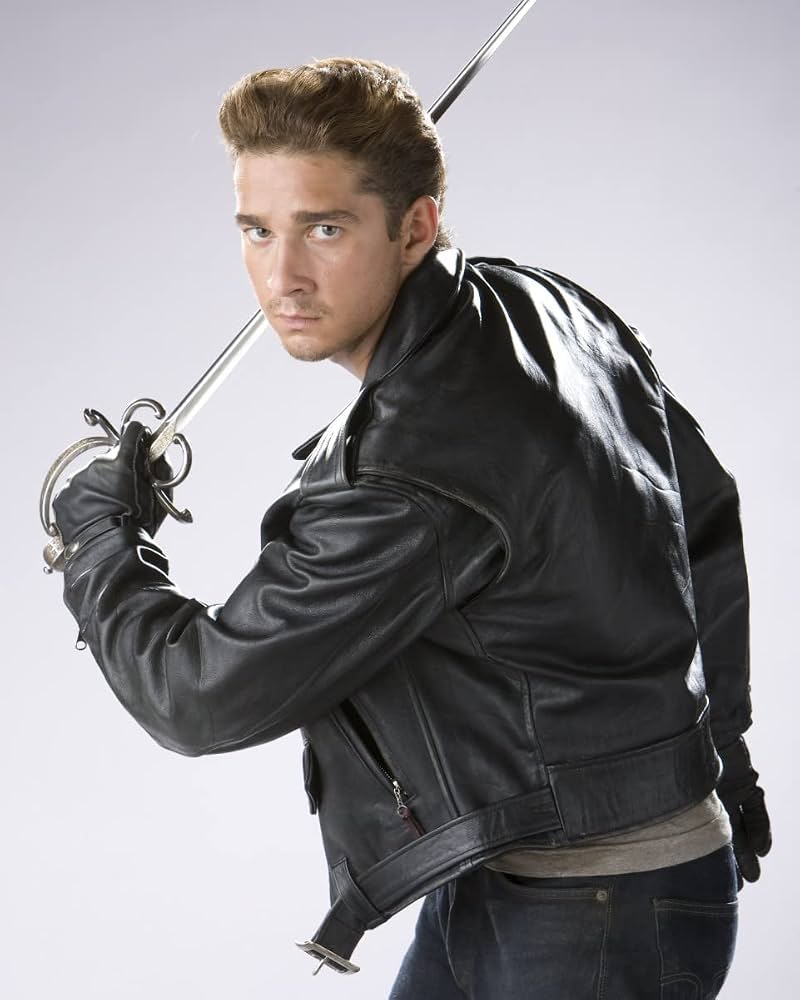
As Mutt Williams, Shia brought youthful energy and charisma to the legendary franchise while holding his own alongside Harrison Ford. Introduced as a leather-jacketed greaser with a quick temper and an independent streak, Mutt initially appears to be little more than a streetwise troublemaker. As the adventure unfolds, however, his intelligence, courage, and loyalty become increasingly apparent, and audiences gradually discover that his connection to Indiana Jones runs far deeper than either character initially realizes.


Shia’s performance captures the confidence and impatience of a young man eager to prove himself while subtly revealing moments of vulnerability beneath Mutt’s tough exterior. His chemistry with Harrison Ford gives much of the film its heart, with their banter evolving naturally from reluctant partnership into a believable father-and-son relationship. Their dynamic allows for plenty of humor while adding an emotional layer that distinguishes Kingdom of the Crystal Skull from earlier installments in the series.


The film reunites director Steven Spielberg with creator and executive producer George Lucas, alongside returning composer John Williams, whose instantly recognizable score once again provides the adventurous spirit that has defined the franchise for decades. Lavish practical effects are combined with modern visual effects to create large-scale action sequences featuring high-speed motorcycle chases, elaborate jungle pursuits, ancient temples, and spectacular escapes that remain unmistakably Indiana Jones in style.


The supporting cast includes Cate Blanchett as the calculating Colonel Dr. Irina Spalko, Karen Allen returning as Marion Ravenwood, Ray Winstone as Mac, and John Hurt as Professor Harold Oxley. Together, they help expand the series’ mythology by shifting its inspiration from wartime archaeology toward the science fiction influences and Cold War anxieties that characterized many adventure stories of the 1950s.


Upon its release, Indiana Jones and the Kingdom of the Crystal Skull became a major worldwide box office success and one of the highest-grossing films of 2008. While some aspects of its story sparked lively discussion among fans, the film was widely praised for bringing the beloved franchise back to the big screen and delivering the sense of excitement, humor, and spectacle audiences had come to expect from an Indiana Jones adventure.


For Shia LaBeouf, the film represented another milestone in a career already filled with blockbuster successes. Sharing the screen with Harrison Ford in one of Hollywood’s most enduring franchises demonstrated his growing stature as a leading actor, while Mutt Williams remains one of his most recognizable mainstream roles. Although discussions of the character’s future continued for years after the film’s release, Shia’s spirited performance ensured that Mutt became a memorable addition to the Indiana Jones legacy, bringing fresh energy to a series built on timeless adventure.

Peanut Butter Falcon


Written by Siobhan on June 23 2026

One of the most heartfelt and universally beloved films of Shia LaBeouf’s career, The Peanut Butter Falcon is an uplifting modern fable about friendship, found family, and discovering where you belong. Blending humor, adventure, and genuine emotional depth, the film earned widespread acclaim for its warmth and sincerity, becoming an unexpected independent success and introducing audiences to one of Shia’s most quietly affecting performances.


Shia stars as Tyler, a troubled fisherman drifting through the North Carolina Outer Banks after the death of his brother. Angry, isolated, and carrying more emotional weight than he knows how to express, Tyler’s life changes when he unexpectedly crosses paths with Zak, a young man with Down syndrome who has escaped from his assisted living home to pursue his lifelong dream of becoming a professional wrestler.


Initially reluctant to help, Tyler slowly becomes Zak’s protector, teacher, and closest friend as the pair journey across rivers, forests, and back roads toward Zak’s chosen destination. Along the way they are pursued by Eleanor, Zak’s determined caregiver, whose own understanding of Zak’s independence begins to evolve. What begins as an unlikely partnership gradually becomes a deeply moving story about acceptance, healing, and the families we choose for ourselves.


Much of the film’s emotional strength comes from the remarkable chemistry between Shia and Zack Gottsagen, whose natural, unscripted friendship became one of the movie’s defining qualities. Rather than treating Zak as someone who needs rescuing, Tyler comes to see him as an equal—a relationship built on trust, humor, and mutual encouragement. Their performances give the film an authenticity that resonated strongly with both critics and audiences.


Tyler is among the most nuanced characters Shia has portrayed. Tough, impulsive, and often reckless, he nevertheless possesses a quiet compassion that slowly emerges as the story unfolds. Shia balances Tyler’s rough exterior with moments of surprising vulnerability, allowing viewers to witness a man learning to forgive himself while helping someone else pursue a dream. His understated performance avoids melodrama, relying instead on small gestures, subtle expressions, and believable emotional growth.


The film also benefits from beautiful coastal cinematography, a gentle folk-inspired soundtrack, and a script that embraces optimism without ever feeling overly sentimental. While its story echoes the structure of a classic American adventure, it remains grounded by sincere performances and an emphasis on kindness, resilience, and hope.


Written and directed by Tyler Nilson and Michael Schwartz, The Peanut Butter Falcon was created specifically with Zack Gottsagen in mind after the filmmakers met him through an acting program for performers with disabilities. Their commitment to telling Zak’s story authentically became one of the film’s greatest strengths and helped make it an important milestone for disability representation in independent cinema.


For many fans, The Peanut Butter Falcon stands as one of the defining highlights of Shia LaBeouf’s later career. It showcases his ability to step away from larger studio productions in favor of intimate, character-driven storytelling, delivering a performance filled with honesty, empathy, and quiet emotional power. Years after its release, the film continues to be celebrated as an inspiring road movie whose message—that everyone deserves the chance to chase their dreams and find a place where they belong—remains as moving as ever.

Page 1 of 4 1 2 3 4
Shia-LaBeouf-The-Greatest-Game-Ever-Played-Poster-0003.jpg
Shia-LaBeouf-The-Greatest-Game-Ever-Played-Poster-0001.jpg
Shia-LaBeouf-The-Greatest-Game-Ever-Played-Poster-0002.jpg
Shia-LaBeouf-The-Greatest-Game-Ever-Played-Stills-0015.jpg
Shia-LaBeouf-The-Greatest-Game-Ever-Played-Stills-0016.jpg
Shia-LaBeouf-The-Greatest-Game-Ever-Played-Stills-0013.jpg
Shia-LaBeouf-The-Greatest-Game-Ever-Played-Stills-0014.jpg
Shia-LaBeouf-The-Greatest-Game-Ever-Played-Stills-0012.jpg
Shia-LaBeouf-The-Greatest-Game-Ever-Played-Stills-0004.jpg
Shia-LaBeouf-The-Greatest-Game-Ever-Played-Stills-0005.jpg
Shia-LaBeouf-The-Greatest-Game-Ever-Played-Stills-0006.jpg